

The U.S. Bureau of Labor Statistics released today’s highly anticipated November Consumer Price Index (CPI) data. With October data missing due to the federal government shutdown, this report carries extra significance for market sentiment and Federal Reserve policy direction.
Core Data Breakdown
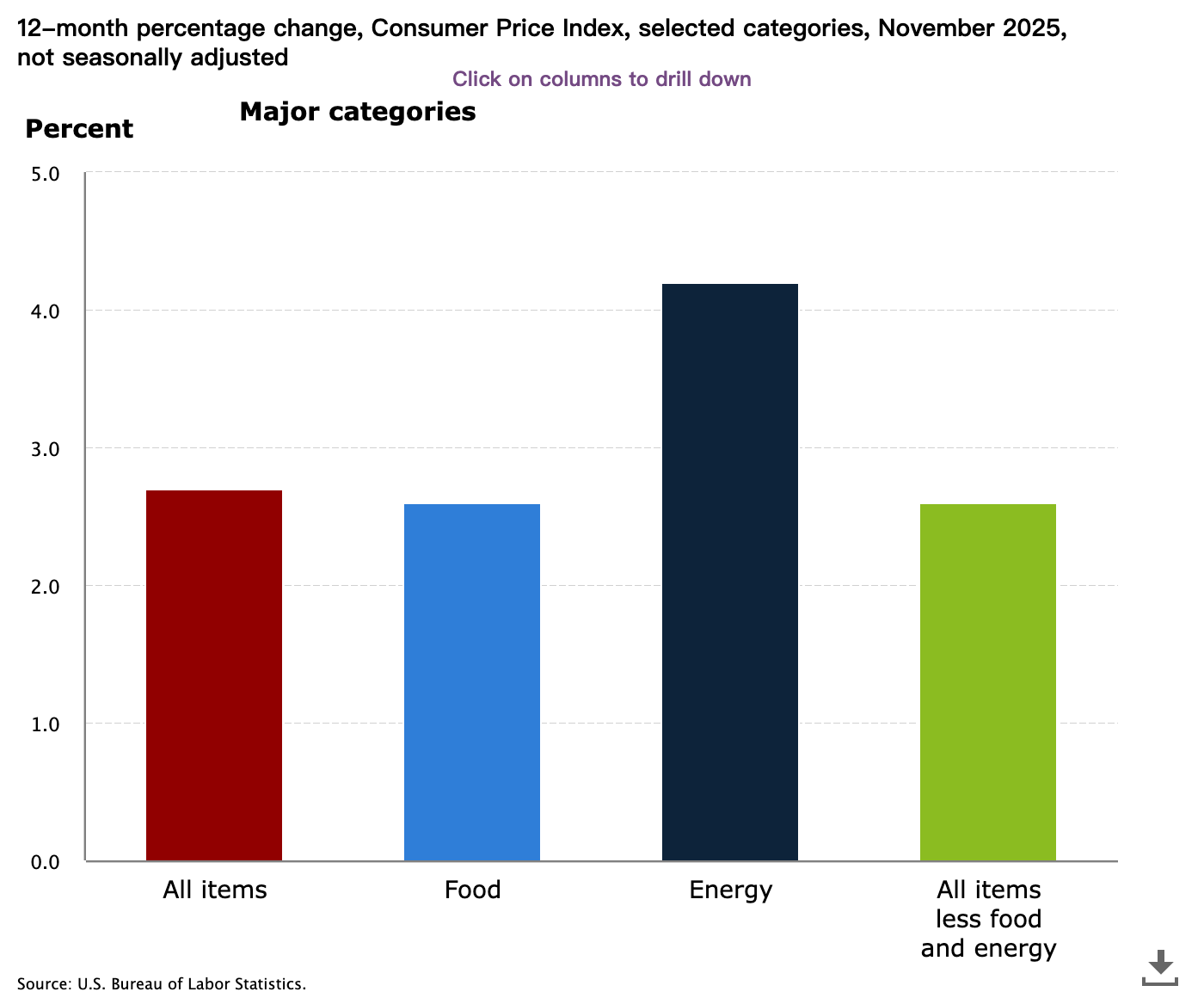
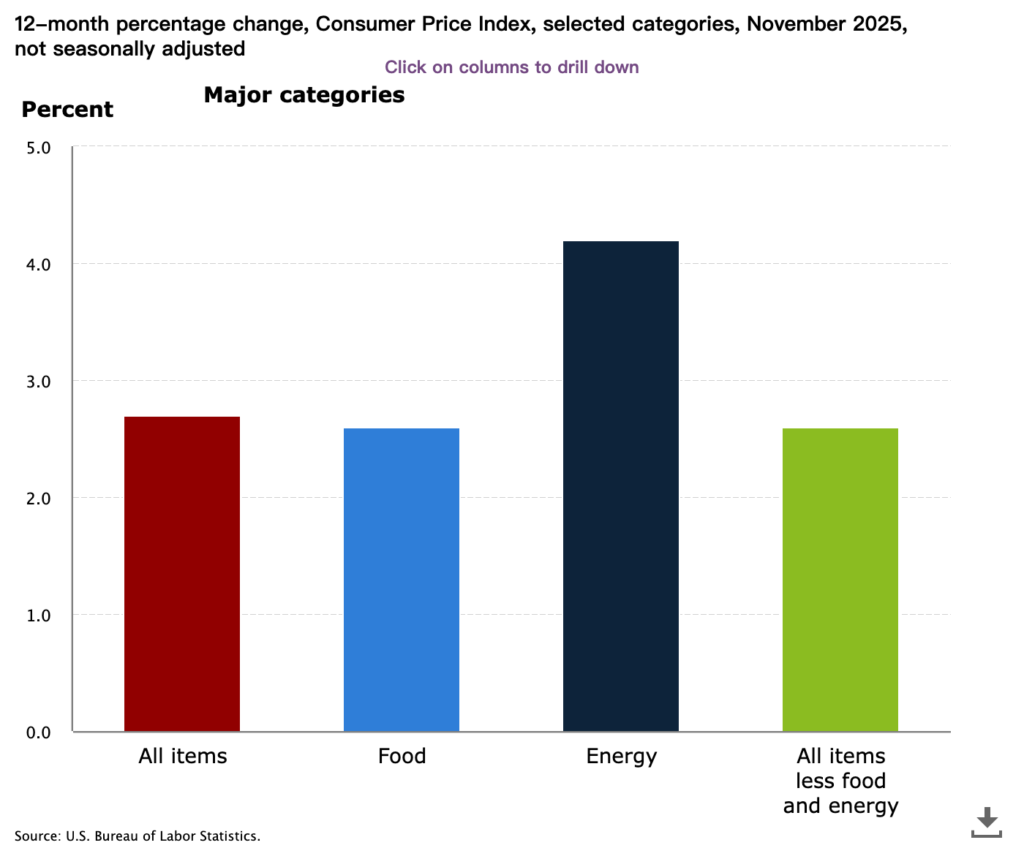
The November CPI rose 2.7% year-over-year, down from 3.0% in September. More importantly, core CPI (excluding food and energy) increased 2.6% annually, showing continued easing of underlying inflation pressures.
These numbers matter significantly for investors:
- Headline Inflation: 2.7% annual growth, below expectations
- Core Inflation: 2.6% annual growth, approaching the Fed’s 2% target
- Food Prices: Up 2.6% year-over-year, showing moderate growth
- Energy Prices: Up 4.2% annually, reflecting energy market volatility
Impact on Cryptocurrency Markets
The improved inflation data injects positive signals into the cryptocurrency market. Historical experience shows that when inflation pressures ease, the Federal Reserve is more likely to adopt accommodative monetary policy, typically benefiting risk assets including cryptocurrencies.
Stock market futures surged following the release while Treasury yields tumbled, showing the market’s positive reaction to this news. For cryptocurrency investors, this could mean:
- Improved Liquidity: If the Fed continues rate cuts in 2025, more liquidity will flow into markets
- Rising Risk Appetite: Cooling inflation reduces the risk of monetary tightening, supporting risk asset valuations
- Growing Institutional Interest: U.S. banks being cleared to trade Bitcoin further legitimizes cryptocurrencies
Bitcoin Price Movement
As of the data release, Bitcoin rose 2.07% in 24 hours to $87,405.69. Technical indicators show a bullish MACD crossover with solid Fibonacci support levels holding firm.
However, market sentiment remains cautious. The Fear & Greed Index currently stands at 25, in the “Fear” zone, indicating investors haven’t fully regained confidence. This is primarily influenced by:
- Strengthened correlation between Bitcoin and U.S. equities, with tech weakness dragging crypto
- Liquidation pressure from high-leverage trading
- Uncertainty about the 2025 economic outlook
💡 Key Takeaway for Beginners: CPI (Consumer Price Index) measures how fast prices are rising. When inflation cools down (like now), central banks may lower interest rates, which historically makes investors more willing to put money into cryptocurrencies and other risk assets.
Federal Reserve Policy Outlook
While CPI’s earlier rise from 2.4% to 2.8% raised concerns about persistent inflation, November data shows this trend is reversing. Market expectations:
- Short-term: The Fed may pause rate cuts early next year to observe economic data
- Medium-term: If inflation continues cooling, there could be room for 2-3 rate cuts in 2026
- Long-term: Shelter inflation continues decelerating, creating conditions for monetary policy normalization
Key Points for Investors
For cryptocurrency investors, the current environment presents both opportunities and challenges:
Positive Factors:
- ✅ Inflation data better than expected, increasing likelihood of looser monetary policy
- ✅ Improving regulatory environment, lowering institutional entry barriers
- ✅ Technical support holding firm, long-term trend remains upward
Risk Factors:
- ⚠️ Fragile market sentiment, potential for heightened short-term volatility
- ⚠️ Global economic uncertainty (including trade policy changes)
- ⚠️ Liquidation risks from high-leverage trading
What This Means for Different Crypto Investors
For Beginners:
This is an excellent time to learn how macroeconomic data impacts crypto prices. Start with small positions and focus on understanding the relationship between inflation, interest rates, and cryptocurrency valuations. Don’t let short-term volatility shake your long-term strategy.
For Active Traders:
Watch for increased volatility around Federal Reserve announcements in early 2026. The correlation between Bitcoin and traditional markets means you should monitor equity indices, particularly tech stocks, for trading signals.
For Long-term Holders:
The improving inflation picture strengthens the case for continued accumulation. However, maintain proper position sizing and avoid overleveraging, as market sentiment remains fragile.
Upcoming Events to Watch
Several key events could influence crypto markets in the coming weeks:
- January 28-29, 2026: Next Federal Reserve meeting and rate decision
- Late January 2026: December PCE inflation data release (Fed’s preferred measure)
- Early February 2026: January employment report
Conclusion
The improved November CPI data offers a positive start for the cryptocurrency market in 2026. While markets may continue experiencing volatility in the near term, the easing inflation pressure establishes a constructive foundation for long-term trends.
Investors should remain rational, monitor subsequent Fed policy moves, and maintain proper risk management. For cryptocurrency newcomers, understanding how macroeconomic data impacts crypto asset prices is the first step toward becoming a mature investor.
⚡ Action Steps:
- Monitor the Federal Reserve’s January meeting minutes for policy clues
- Follow Bitcoin’s correlation with tech stocks and equity indices
- Set up price alerts at key support and resistance levels
- Review your risk management strategy and position sizes
Disclaimer: This article is for informational purposes only and does not constitute financial advice. Cryptocurrency investments carry significant risks. Always conduct your own research and consult with a qualified financial advisor before making investment decisions.


Leave a Reply